
Heat packs
Heat packs provide a critical but often overlooked function in the cold chain toolkit: the controlled maintenance of elevated temperatures for products that must remain warm, or must not fall below a minimum temperature threshold, during transit. While the cold side of the cold chain receives most attention, a growing range of pharmaceutical, medical device, and specialty food products require protection against cold temperatures as much as against heat — and heat packs are the purpose-built solution.
In pharmaceutical distribution, many medications have a defined acceptable storage temperature range that includes a minimum threshold. Products labelled for storage at 15°C–25°C can be damaged by prolonged exposure to temperatures below 15°C during a winter transit. In southern Australia, particularly during overnight courier transits in winter months, ambient temperatures inside an uninsulated parcel can easily fall to 5°C or below. A heat pack placed alongside the medication within an insulated packaging solution can maintain temperatures within the acceptable range throughout a winter delivery scenario.
Medical device shipments increasingly require controlled temperature maintenance to protect device integrity and sterility packaging. Certain adhesive medical devices require storage above minimum temperatures to ensure adhesive performance; others have sterile packaging that can be compromised by moisture condensation resulting from temperature cycling. Heat packs provide a passive warming solution that can be deployed alongside cold chain packaging to create a bi-directional temperature management system within a single shipment.
For specialty food products — artisan chocolate shipped in winter, activated yeast and starter cultures for artisan bread and brewing operations — heat packs provide the controlled warmth that preserves product quality and viability through the shipping process. For applications requiring temperature verification throughout transit, pair heat packs with our dataloggers for a fully documented, compliance-ready cold chain solution.
Heat packs should be selected and deployed in conjunction with appropriate insulated packaging to achieve and maintain the required temperature range. In export contexts, particularly for airfreight transiting through cold-weather airports in Europe or North Asia, heat packs provide a buffer against inadvertent cold exposure during winter months. Contact Dry Chill for guidance on heat pack selection for your specific application and transit profile. Explore the full refrigerant range.
Showing the single result
-
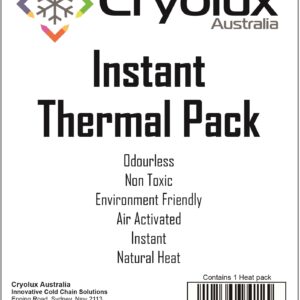
Instant thermal Body Warmer Heat pack – Disposable Hot Pack
Price range: $36.77 through $199.00 This product has multiple variants. The options may be chosen on the product page